
Robotics · 23 November 2026 · 4 min read
Defense AI Lab Agon Raises $70 Million Series A at $450 Million Valuation Backed by Roelof Botha and Dual UK Sovereign Funds
Founded in January 2026 and chaired by Unity founder David Helgason, the UK- and Germany-based lab is building dedicated compute clusters and adversarial multi-agent world models for autonomous military hardware.
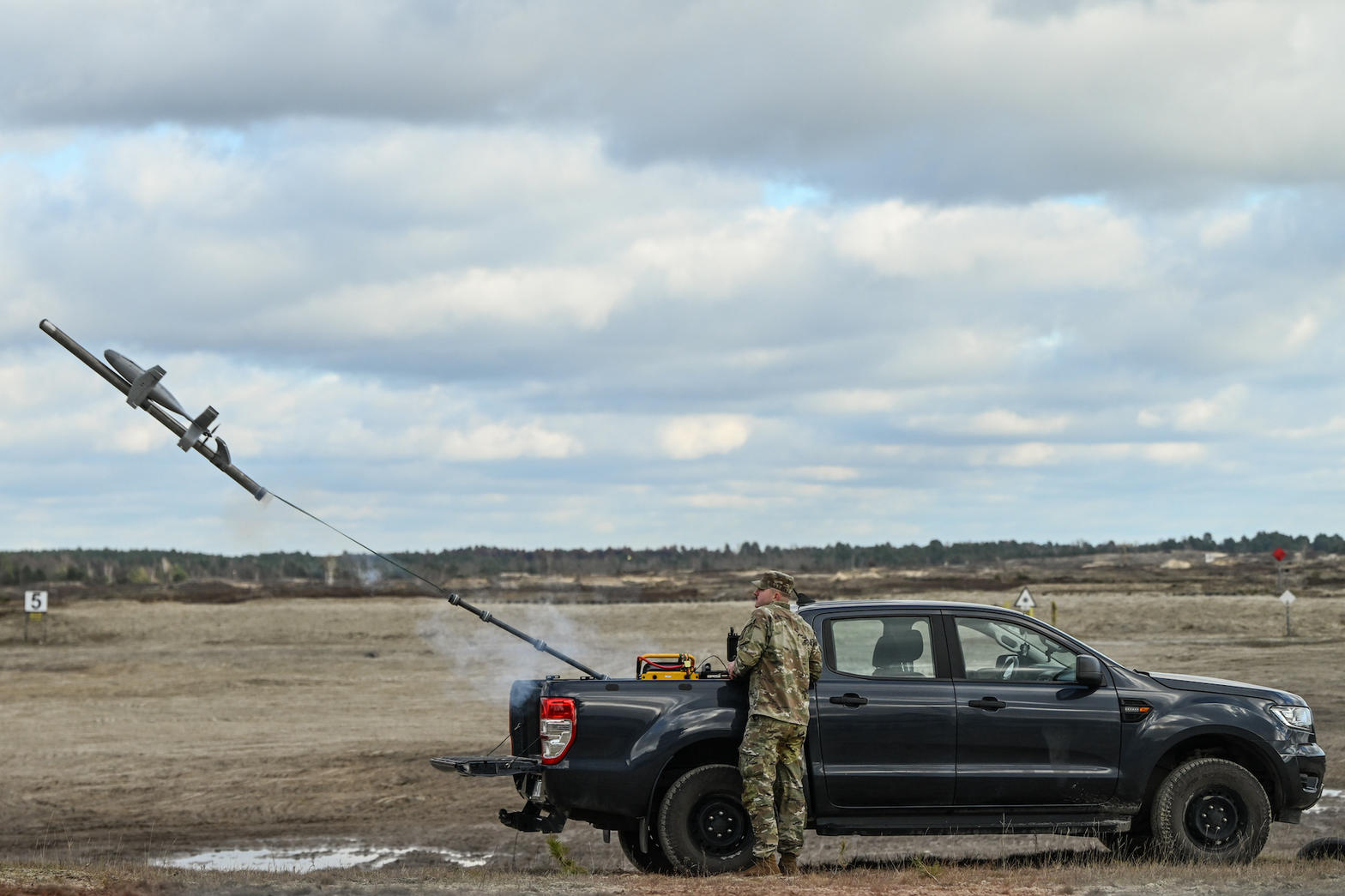
UK- and Germany-based defense artificial intelligence (AI) lab Agon announced a $70 million Series A financing round at a $450 million valuation on Monday, November 23, 2026, bringing its total capital raised to $100 million less than a year after its January 2026 founding (Business Wire, Nov. 23, 2026; Tech Funding News, Nov. 23, 2026). Led by Northzone, the round drew former Sequoia Capital global leader Roelof Botha alongside Lux Capital, Lakestar, XYZ, and—in their first joint investment—both the UK Sovereign AI Fund and the National Security Strategic Investment Fund (NSSIF) (UK Government, Nov. 23, 2026).
The syndicate signals how aggressively Western venture and sovereign capital are pivoting toward compute-intensive Physical AI for defense. Rather than building static command-and-control dashboards, Agon is deploying capital directly into dedicated training clusters and adversarial simulation environments engineered to train autonomous hardware before it ever enters live airspace.
Technical & Financial Breakdown
Chaired by Unity Technologies co-founder David Helgason, Agon is channeling its $70 million Series A—following an earlier $30 million seed round—into two tightly coupled engineering pillars (Business Wire, Nov. 23, 2026; The AI Insider, Nov. 23, 2026):
- Physical Foundation Models: Dedicated graphics processing unit (GPU) compute clusters focused on embodied control and perception policies tailored to high-speed autonomous platforms, including interceptor drones.
- Synthetic Battle Arena: An adversarial multi-agent simulation environment where autonomous defense systems train and fight against adaptive simulated adversaries rather than scripted, static physics routines.
Modern drone and air-defense engagements evolve far faster than traditional multi-year military field-testing cycles allow. By training multi-agent policies inside high-fidelity adversarial world models, defense labs aim to compress software iteration loops from months to hours while testing edge-case electronic-warfare and swarm scenarios that are too expensive or hazardous to stage physically.
Second-Order Implications
The simultaneous participation of the UK Sovereign AI Fund and NSSIF reflects mounting urgency across NATO allies to build domestic autonomous defense stacks independent of single-vendor bottlenecks. For the broader Physical AI sector, Helgason’s involvement underscores how real-time 3D game-engine simulation expertise is converging with frontier reinforcement learning to become core defense infrastructure.
Caveats & Open Questions
Adversarial synthetic arenas still confront the classic sim-to-real transfer gap: unmodeled aerodynamic turbulence, sensor spoofing, and real-world radio-frequency jamming routinely degrade policies that look dominant in simulation. Agon has not disclosed the exact size or silicon vendor of its planned compute clusters, current Ministry of Defence contract revenues, or live flight-test intercept rates .
More in Robotics
- FF EAI Robotics Ecosystem Wins Approved-Supplier Status Across 1,000+ California Schools and Targets Five-State K-12 Expansion
- Ex-DeepMind World-Model Pioneer Danijar Hafner’s Embo Raises $110 Million Seed Led by a16z and NVentures
- Realbotix Launches Series 1 Humanoid Pilot With Swedish Telecom for AI-Powered Hospitality and Event Automation