Robotics · 27 October 2026 · 4 min read
Bedrock raises $600 million. The excavators are already on paid jobs
The Series C, co-led by CapitalG and Emergence, values the company at $4.1 billion after the money. Since August, it says, excavators with no one at the controls have done paid work at named sites. The round does not say how many machines, or what the customer paid.
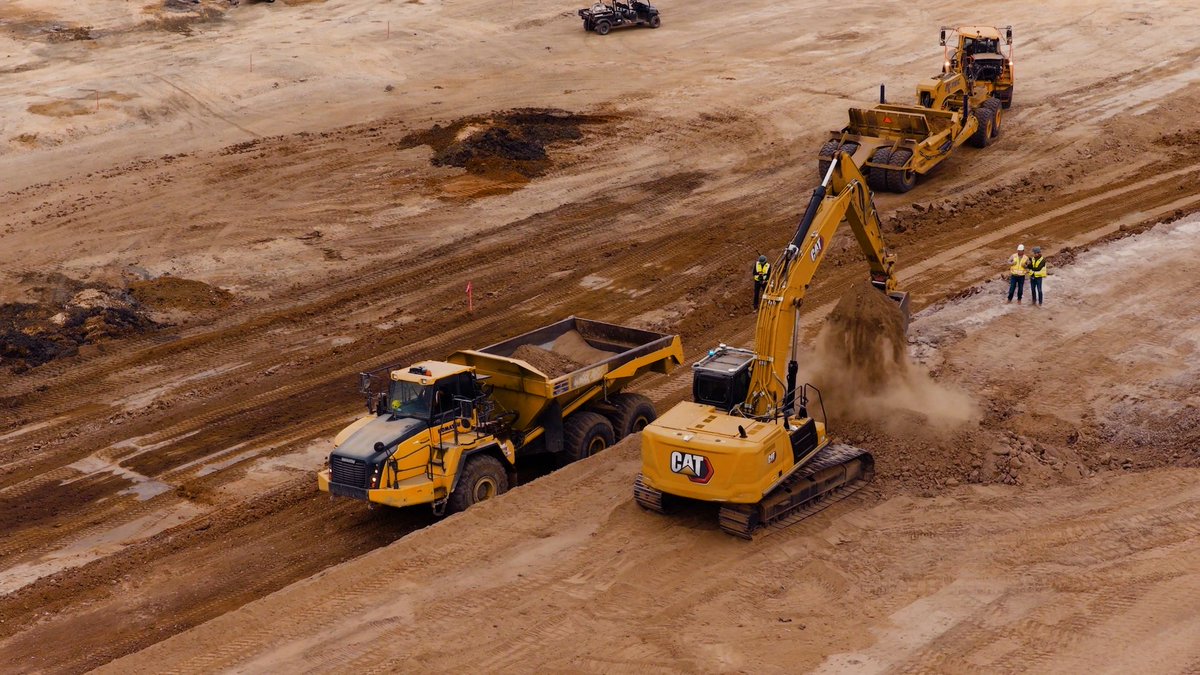
Bedrock Robotics said on 26 October that it has raised $600 million in a Series C, co-led by CapitalG and Emergence Capital. The company puts the valuation at $4.1 billion after the money, and the total raised since it was founded in 2024 at nearly $1 billion. Bloomberg reported that a February round of $270 million had valued it at $1.75 billion. New investors include the US Innovative Technology Fund, Bessemer and Temasek. Nvidia’s venture arm was already in. A higher price, eight months later, is what this set of investors agreed to pay. It is not a measure of dirt moved.
The product is a kit, not a new vehicle. Bedrock fits an autonomy system to machines a contractor already owns, and it has started with excavators. The chief executive, Boris Sofman, previously led Waymo’s truck programme, which Waymo later shut, and co-founded Anki, the consumer-robot company that closed in 2019. The relevant fact for a buyer is the other one: the company is not asking a site to scrap its fleet.
The commercial claim is narrower than a valuation, and more useful. Bedrock says that since the middle of August, excavators running the system with no one at the controls have done paid work on live jobs. The sites named in the reporting are a water-treatment project in Nevada, an earthworks job for Champion Site Prep in Texas, and a civil project of 1.2 million cubic yards with Zachry Construction. Further names have since been attached to contracts rather than to shifts already worked: Wagner Construction in Minnesota, Smith Trucking in Florida, B&S Site Development in Virginia, and Native Excavating in Colorado. A contract is a plan. A shift with nobody in the cab is the record.
What the announcement does not give is the operating log. It does not say how many excavators, how many hours, what they were paid, or what a person still does at the edge of the cut. The new capital is for more sites, and for the people and the shops that support them. That is a scaling plan for a kit that has left the pilot. It is not yet a rate a second contractor can be promised.