Robotics · 22 November 2026 · 4 min read
BlackBerry QNX Targets Physical AI Robotics Growth as NVIDIA Standardizes on QNX for Halos Safety Stack
With QNX’s royalty backlog topping $1.2 billion (+26% YoY), BlackBerry is extending its safety-certified RTOS from connected vehicles into autonomous forklifts, AMRs, and medical robots.
Lede & Nut Graf
BlackBerry Limited is pivoting its QNX embedded software division squarely into Physical AI, with Chief Executive Officer John Giamatteo identifying industrial robotics as one of QNX’s fastest-growing verticals (Digital Journal, Nov. 22, 2026). Anchoring that expansion, Giamatteo highlighted that NVIDIA has standardized on QNX for its Halos Safety Stack, embedding BlackBerry’s real-time operating system (RTOS) directly into autonomous machinery and warehouse robotics.
The partnership exposes an overlooked engineering truth in embodied artificial intelligence (AI): probabilistic neural networks cannot legally or safely control heavy machinery alone. They require a deterministic, safety-certified foundation underneath to guarantee sub-millisecond obstacle response and fail-safe shutdowns.
Technical & Financial Breakdown
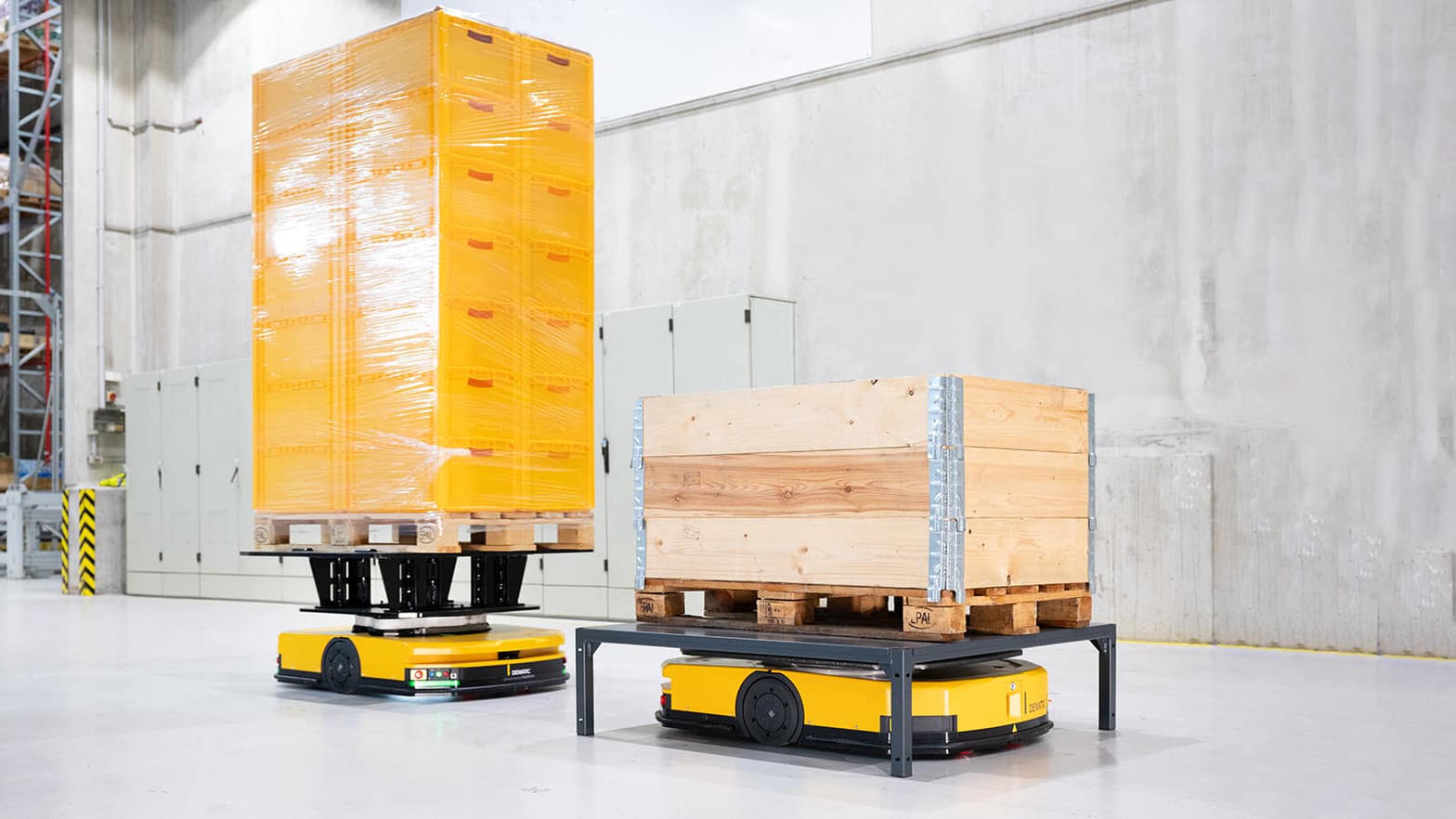
Unlike general-purpose Linux distributions used during AI model prototyping, QNX provides deterministic scheduling and functional-safety certifications honed across more than 45 years in automotive and mission-critical embedded systems (Auto Electronics Korea, Oct. 26, 2026). As warehouse autonomous mobile robots (AMRs), autonomous forklifts, pallet movers, and medical equipment transition to higher-compute AI processors like NVIDIA IGX Thor, manufacturers must isolate safety-critical actuation loops from non-deterministic AI inference.
Financially, demand for software-defined vehicles and early Physical AI adoption pushed QNX’s royalty backlog to a record above $1.2 billion—up 26% from roughly $950 million a year earlier (BigGo Finance, Oct. 28, 2026). BlackBerry is funding QNX’s industrial expansion using cash flow from its secure communications business, which delivered 20% growth and an 87% gross margin in Q2 and is set to expand deployments with Canada’s Department of National Defence in late 2026 (Digital Journal, Nov. 22, 2026).
Second-Order Implications
Standardizing NVIDIA’s Halos Safety Stack on QNX gives BlackBerry direct distribution into thousands of robotics original equipment manufacturers (OEMs) building on NVIDIA silicon without requiring BlackBerry to build a massive standalone robotics sales force. As European Cyber Resilience Act (CRA) vulnerability-reporting mandates and US workplace safety regulations tighten between 2026 and 2027, pre-certified safety software stacks will command sticky, per-unit royalty streams.
Caveats & Open Questions
Royalty backlog represents multi-year expected collections tied to future OEM production volumes rather than immediate recognized revenue. BlackBerry has not broken out what percentage of its $1.2 billion QNX backlog comes from industrial robotics versus legacy automotive programs.
More in Robotics