Infrastructure · 3 November 2026 · 5 min read
Drax signed Brookfield to plan a data centre at Selby. The first 100 megawatts are still a plan
Drax said on 3 November it will develop an AI data centre with Brookfield and Radiant on the power-station estate, targeting more than 1 gigawatt. Phase one is up to 100 megawatts, aimed at early 2028, and it still needs planning consent, network approval and a tenant. That phase imports power from the grid. It does not turn the station’s boilers onto the computers.
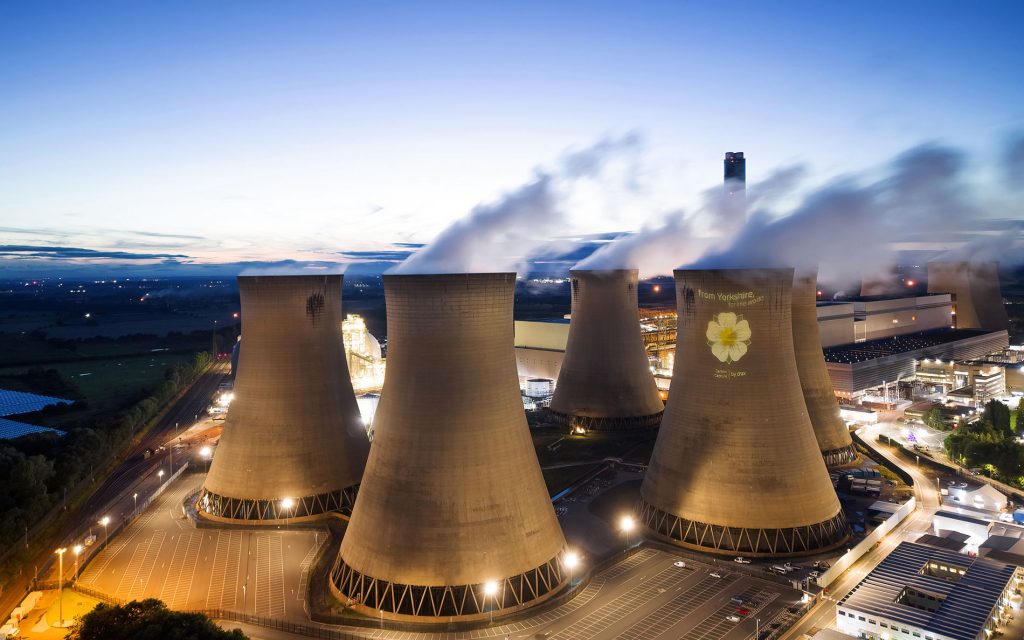
Drax confirmed on 3 November, in a stock-exchange release, that it has signed an agreement with Brookfield and with Radiant, which it calls Brookfield’s UK-headquartered AI infrastructure platform. The three will jointly develop, deliver and operate an AI data centre on the Drax Power Station estate in North Yorkshire. The target is more than 1 gigawatt. Phase one is a hall of up to 100 megawatts, which the company wants operating from the first quarter of 2028. Brookfield’s estimate of the money for that phase is £2.5 billion. An estimate in a release is not money that has been spent, and a target quarter is not a date the computers are on.
The later phases are written as ambitions, not as orders. Phase two is a further 500 megawatts between 2028 and 2031. Phase three is more capacity after 2031. Brookfield estimates that the whole development, including the semiconductor chips, could cost more than £20 billion. The chips are in that sentence on purpose. A building without accelerators is not an AI factory, and the £20 billion is not a sum Brookfield has committed to wire this month. What the estate already has, Drax says, is 4 gigawatts of grid access and 2.6 gigawatts of dispatchable generation. Access and generation are not the same thing as a hall that is drawing either of them.
The first watts come from the grid, not the boilers
Phase one, as Drax describes it, sits on land at the station and imports power through connections that are already there. Drax would manage that import. Radiant would lead design, customer talks and commercial terms, and would look for an anchor tenant before construction starts. Drax would lead on the land, the power integration and the planning. A planning application is being prepared. A public consultation is expected to start in November 2026. The company says the phase goes ahead only with that planning, with the regulatory and network approvals, and with a tenant. The Guardian reported that Drax hopes to supply the computers directly from the station in the early 2030s. A hope for the next decade is not the 2028 plan. The 2028 plan is a grid customer on a power-station site.
Will Gardiner, Drax’s chief executive, said the site is one of the few in Britain that can offer large-scale reliable power straight to a data-centre customer, using generation that is already there and underused. That is the company’s case for the postcode. It is not a meter. The Guardian also reported that the shares rose by almost 9 per cent, taking the market value to almost £3 billion. A share move on the morning of a release is not a tenant, and it is not a megawatt that has been connected. Until a planning consent, a network approval and a named customer are on paper, Selby is a power station with an agreement to study a data centre.