AI · 27 October 2026 · 4 min read
The large gas turbines are booked through 2029. The data centres are still being announced
Industrial Info says about $130 billion of projects were rejected in the first quarter, and that at least $400 billion a month in new data-centre projects has been announced since April. A trade report says GE Vernova, Mitsubishi Power and Siemens Energy are sold out of the larger turbines through 2029, with some orders into 2031. Those are analyst tallies, not one order book.
The chip is no longer the only queue. Data Center Knowledge, citing Shane Mullins of Industrial Info Resources, reported on 27 October that about $130 billion of projects were rejected in the first quarter of 2026, more than in the whole of 2025, and that the number of opposition groups had more than doubled. “Rejected” is the analyst’s word. It is not a government total, and it is not the same thing as every project that drew a protest and carried on.
The same source gives the other half of the picture. Industrial Info’s tally is at least $400 billion a month in newly announced data-centre projects worldwide since April, and more than $650 billion in May. Announced is not financed, and not built. The useful comparison is the gap between those two figures: a very large amount of capacity is still being put on slides while another, smaller, amount is being stopped.
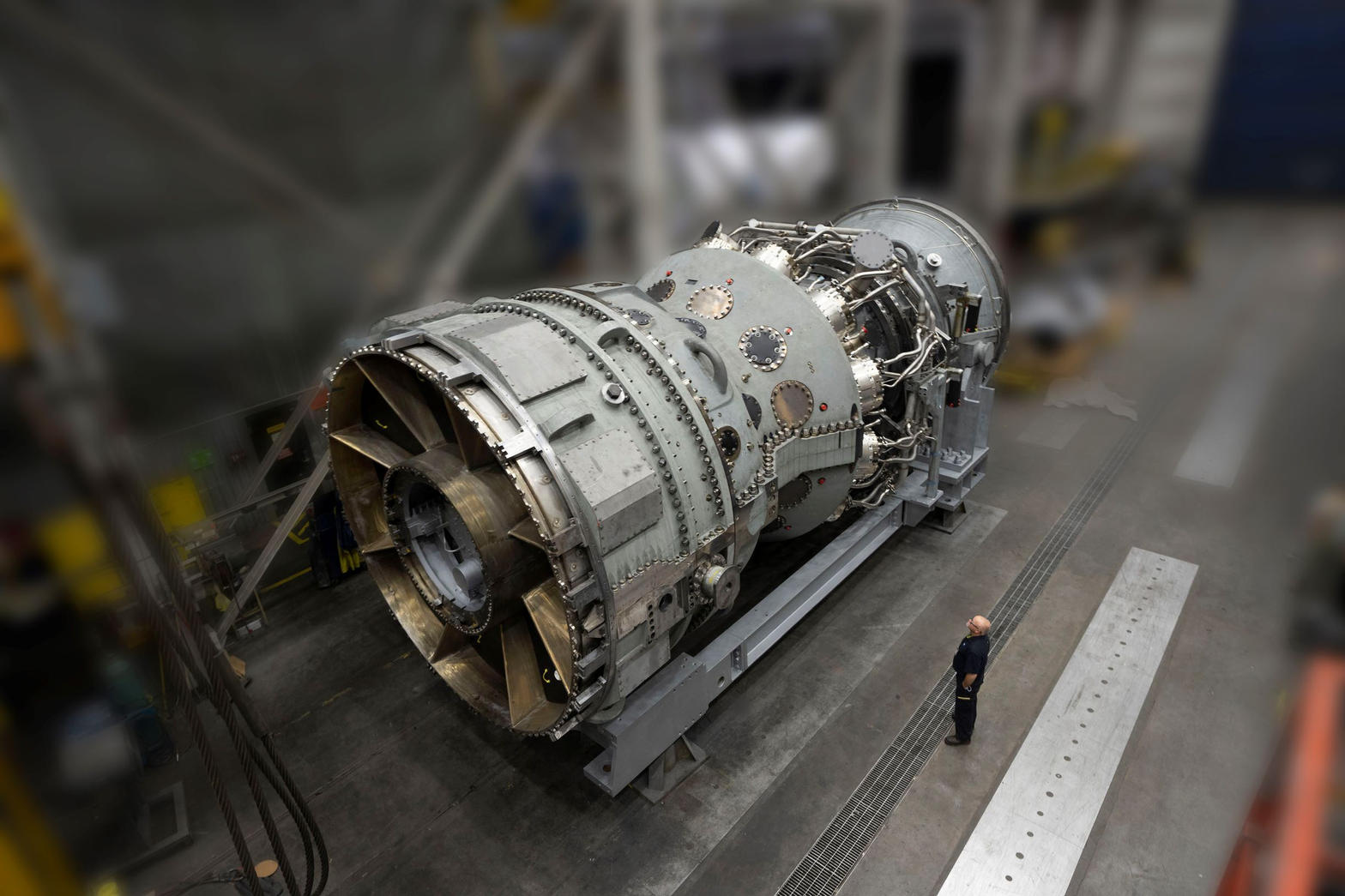
For a site that wants more than a gigawatt, the report says a large gas turbine is still the machine buyers ask for, and that the three makers of those machines are out of near-term slots. GE Vernova, Mitsubishi Power and Siemens Energy are described as sold out of the larger turbines through 2029, with some orders stretching into 2031. The same manufacturers are adding factory capacity. A separate note from Jefferies has argued that the equipment bottleneck is easing later in the decade, as more gigawatts of machinery become available in 2028, 2029 and 2030. Both descriptions can be true. Nothing large is free for a campus that wants power now. The factories are not standing still.
What arrives sooner is smaller. The report says other suppliers are offering fuel cells, reciprocating gas engines and jet-engine generators as the faster way to put some compute online. Those are a bridge, on the report’s own account, not a replacement for the large-frame turbine a multi-gigawatt drawing was built around. A buyer who cannot get that turbine has three choices: wait, take a smaller machine, or do not build. The photograph is the class of plant. It is not a delivery date.