Robotics · 11 October 2026 · 6 min read
Jabil says humanoids are leaving the hand-built phase
The contract manufacturer, which already works with Apptronik, told The Robot Report on 8 October that the next step is tens of thousands of units. That is a description of the phase, not an order book.
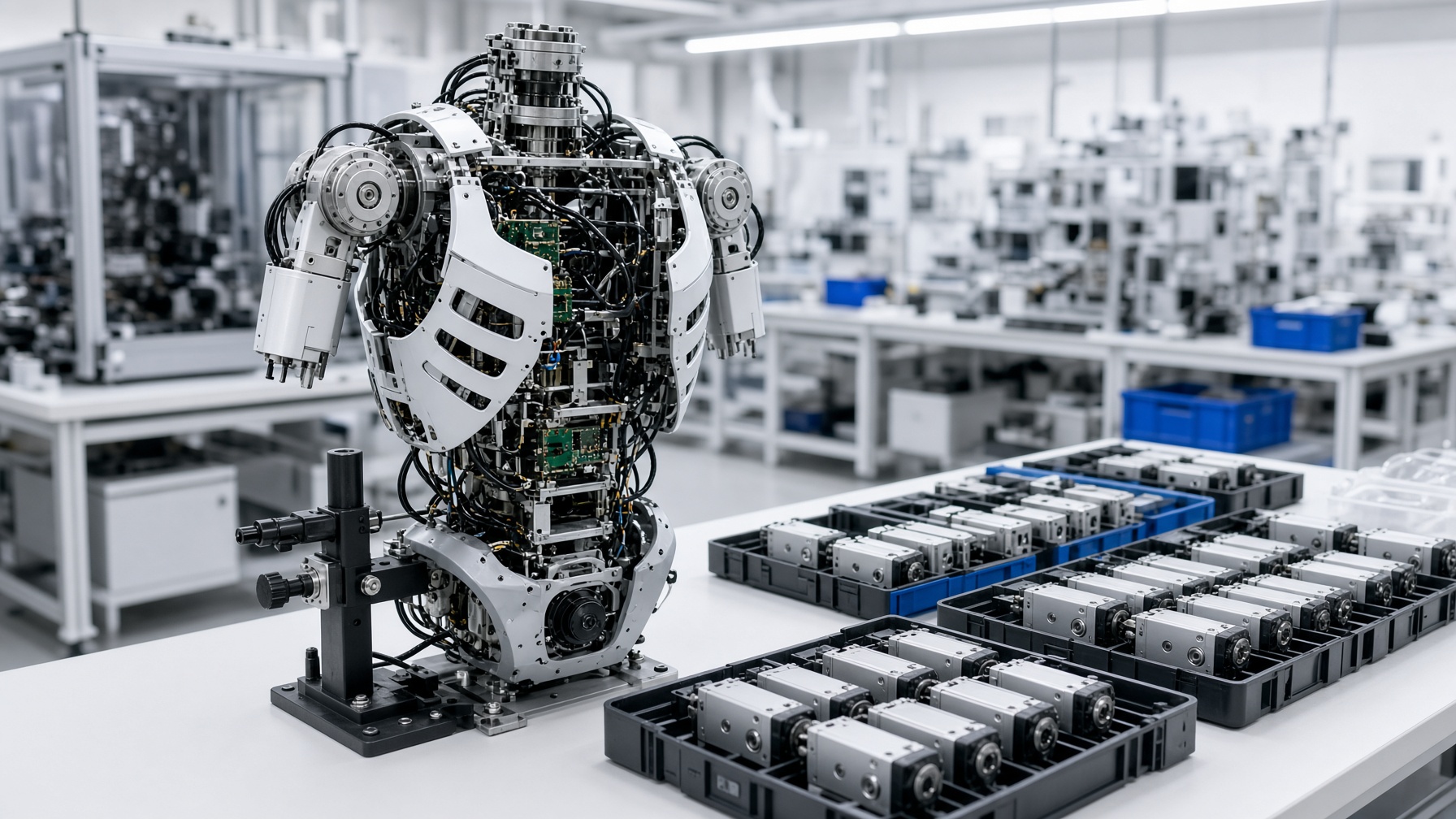
Jabil, the Florida contract manufacturer, says humanoid makers are moving out of the stage where a few machines can be finished by hand. Thomas Brown, its senior director for engineering and technology, told The Robot Report on 8 October that customers have put humanoids out in low volumes, and that the industry is entering a phase of tens of thousands. At that point, he said, a robot needs a cost structure, a way to be manufactured, and a higher standard of quality. Jabil’s pitch is that it already does those three things for other hardware.
The named relationship is Apptronik. Jabil has worked with the company on taking the Apollo humanoid into active manufacturing environments. Brown said Jabil is also working with major humanoid developers in the United States and abroad, and that he could not name them. A manufacturer declining to name its other clients is ordinary. It is not evidence that those clients have a factory order.
What “tens of thousands” does and does not mean
Brown was describing the volume at which hand assembly stops making sense. He was not publishing a forecast of how many Apollos, or anyone else’s robots, will ship. A phase is a judgement about the work in front of a factory. A shipment is a count. This desk has the first. It does not have the second.
The other constraint he named is the computer on the robot, not the one in a demo hall. Compute, he said, is now enough for many of the experiences on demonstration reels, but the machines still need more capacity at the edge. Memory and compute prices remain a problem for anyone trying to build at scale. That is the unglamorous half of a humanoid bill of materials: the part that has to be cheap enough, and available enough, to put the same computer in the ten-thousandth unit as in the first.
There is a reason a contract manufacturer is the person saying this. The companies that show a robot walking are not, for the most part, the companies that stamp, source and test tens of thousands of actuators. Jabil’s value, on its own account, is costing a design down until it can be repeated. Whether any of its unnamed clients accept that cheaper design, and then actually place the volume, is the part that has not been announced.