Robotics · 30 October 2026 · 5 min read
LG puts a home humanoid at about 2030. The data year is not the same in every report
On the 28 October earnings call the company said manufacturing and logistics come first, and homes when a household can afford the machine. Seoul Economic Daily has 500,000 hours of training data by the end of this year. Another Korean report of the same call puts those hours in 2027.
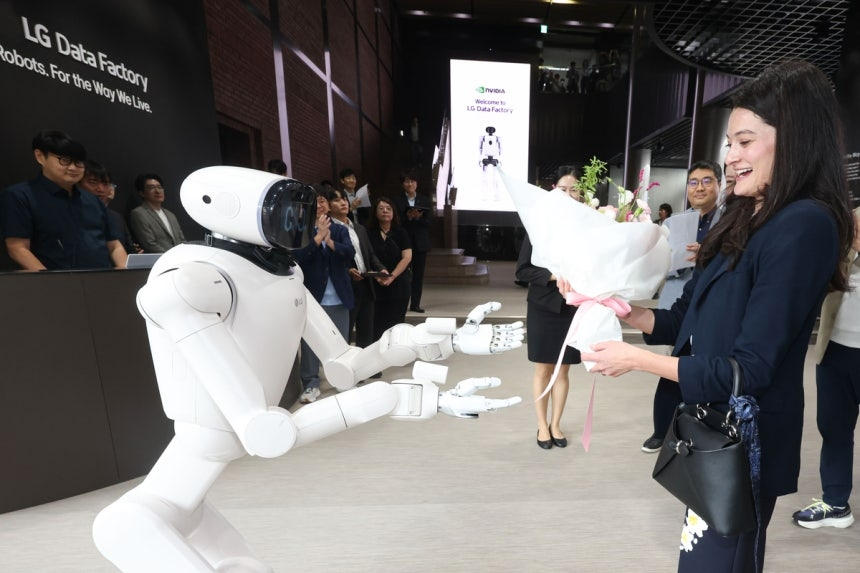
LG Electronics used its third-quarter call, on 28 October, to put a date on a home humanoid, and the date is not this product cycle. Seoul Economic Daily’s account of the call has the company saying it will take the manufacturing and logistics markets first, and expand into home humanoids in 2030. The same account says a household price matters, and that LG is preparing robots and shapes that can enter a home without waiting for the market to be obvious. A year on a strategy slide is a sequence. It is not a model a buyer can order, and the call did not give a price.
The training target is where the reports split, and they should not be averaged. Seoul Economic Daily quotes the call as planning a cumulative 500,000 hours of data by the end of this year, five times an August target of 100,000 hours, because data had piled up faster than expected. Green Economy, reporting the same call, puts the 500,000 hours next year, and in one passage says by 2027. Both papers are describing one conversation. They do not agree on the year. No transcript was published with either story. Until LG prints the sentence, the honest line is that the company has raised a data target, and the Korean coverage does not settle when it falls due.
The place the hours are supposed to come from is more concrete than the calendar. The Data Factory is described as about 10,000 square metres at the Yangjae research campus in Seoul. Full operation is put in the fourth quarter. Seoul Economic Daily quotes the company saying the priority there is the performance of LG’s own robots, with Nvidia, and that selling the data or charging for tests is a later question, not the first one. The photograph that travelled with the story is from 18 August: Madison Huang, a senior director at Nvidia, with a CLOiD on a floor the caption still calls under construction. A visit in August and “full operation” in the fourth quarter can both be true. The picture is not evidence that the 500,000 hours already exist.
A further report goes past what those quotations support. Businesskorea, writing on 30 October, says LG is working toward a bipedal humanoid based on Nvidia’s Isaac GR00T, for an unveiling in the first quarter of 2027. That line is not among the quotations Seoul Economic Daily printed from the call. Treat it as the paper’s account, not as a sentence LG has put in a release. The call itself was an earnings call. Seoul Economic Daily puts third-quarter revenue at 23.8 trillion won, up 8.9 percent. The robot remarks were a strategy passage inside a results day. They were not a shipment.