AI · 19 November 2026 · 5 min read
NVIDIA Doubles Q3 FY27 Revenue to $115.8 Billion as Vera Rubin NVL72 Ramps and Guides Q4 to $130 Billion
Reporting under interim CEO Colette Kress, NVIDIA delivered $107.6 billion in Data Center revenue while forecasting a 300-basis-point gross margin dip during the Rubin transition.
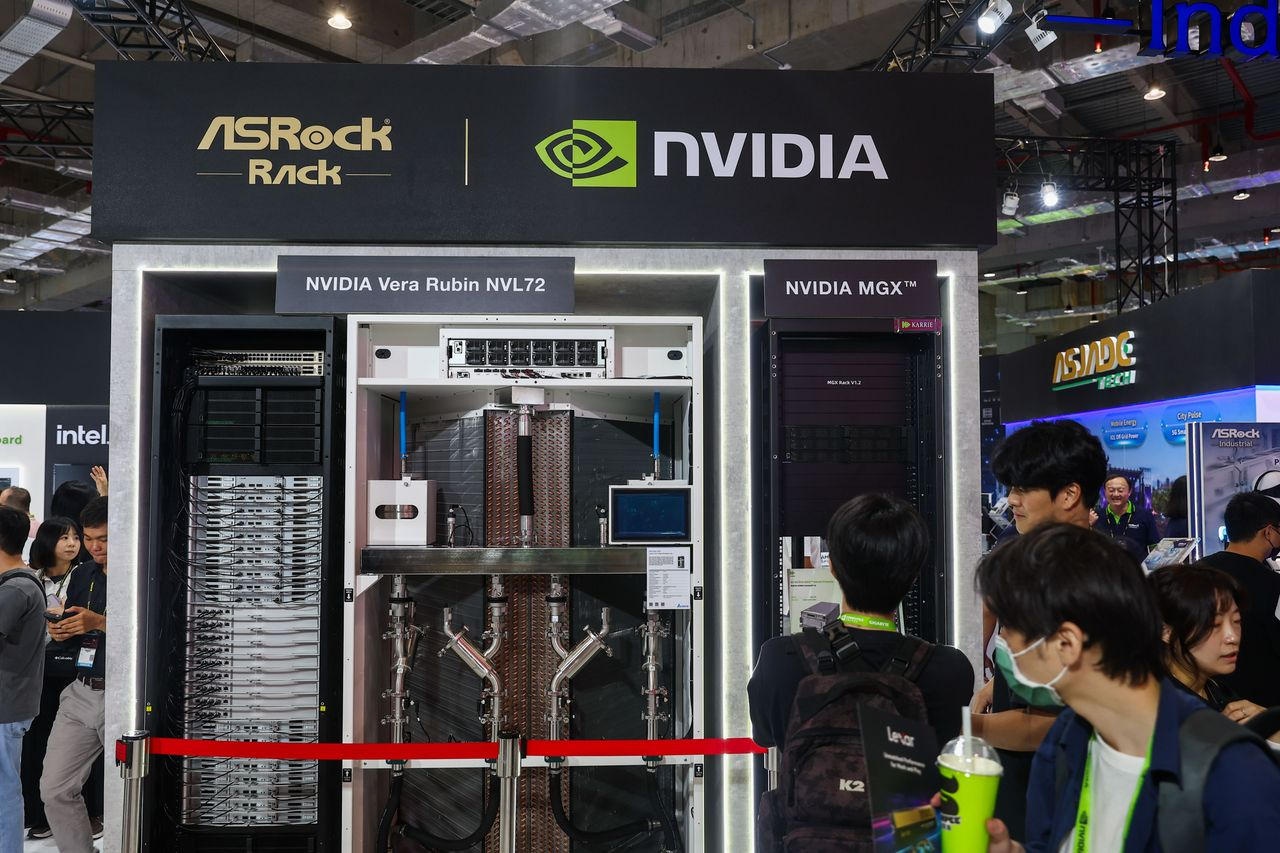
NVIDIA Corporation reported $115.8 billion in third-quarter fiscal 2027 revenue on November 17, 2026—up 103% from $57.0 billion a year earlier—as volume deliveries of its Vera Rubin NVL72 rack-scale systems accelerated (NVIDIA Investor Relations, Nov. 17, 2026). Guiding fourth-quarter revenue to $130.0 billion (±3%), management signaled that global demand for graphics processing unit (GPU) clusters remains tightly supply-constrained.
The results mark the first earnings report with Chief Financial Officer Colette Kress serving as interim Chief Executive Officer following Jensen Huang’s resignation (Investing.com, Nov. 17, 2026), calming immediate fears that executive turnover would stall NVIDIA’s annual hardware cadence.
Technical & Financial Breakdown
Data Center revenue surged 110% year over year to $107.6 billion, powered by a notable broadening of NVIDIA’s customer base (NVIDIA Q3 FY27 presentation, Nov. 17, 2026). While hyperscale cloud buyers grew 71% year over year to $60.1 billion, the AI Clouds, Industrial, and Enterprise segment soared 195% to $47.5 billion—now representing roughly 44% of total Data Center sales.
On the silicon side, Vera Rubin NVL72 delivered the fastest product ramp in NVIDIA history, generating nearly $20 billion in incremental sequential revenue alongside ongoing Blackwell Ultra shipments. In its initial MLPerf Training submission, Vera Rubin NVL72 achieved up to 2x the performance per GPU of Blackwell Ultra.
Quarterly profitability remained exceptional, with GAAP gross margin rising 140 basis points year over year to 74.8% (74.9% non-GAAP), GAAP operating income climbing 115% to $77.5 billion, and GAAP diluted earnings per share (EPS) hitting $2.70 (+108% YoY). For Q4 FY27, however, NVIDIA guided GAAP and non-GAAP gross margins down to 71.0%–72.0% alongside $10.7 billion in non-GAAP operating expenses.
Second-Order Implications
The near-tripling of non-hyperscale revenue weakens the argument that NVIDIA’s order book depends entirely on capital expenditure (CapEx) cycles at four US tech giants. Sovereign clouds, specialized neoclouds, and industrial enterprises have scaled into a nearly $200 billion annualized demand channel on their own.
At the same time, the guided 300-basis-point gross margin contraction highlights the bill-of-materials trade-off of selling fully integrated, liquid-cooled 72-GPU racks. Early-stage yield losses, advanced packaging costs, and high-bandwidth memory pricing weigh more heavily on rack-scale hardware than on standalone chips.
Caveats & Open Questions
Fourth-quarter revenue guidance benefits from an extra calendar week in the reporting period, while NVIDIA continues to model zero Data Center compute revenue from China. Two open questions will dominate the stock heading into 2027: how quickly Rubin manufacturing yields push margins back toward 75%, and how smoothly the board installs a permanent CEO without disrupting the post-Rubin roadmap.
More in AI