Robotics · 4 November 2026 · 5 min read
Boston Dynamics says a Stretch drive now swaps in an hour. The unloading rate still depends on the boxes
On 3 November the company unveiled Stretch Gen 2, the next version of the robot that unloads trailers. It says the redesign comes from more than 100,000 operating hours and tens of millions of boxes. A full swerve-drive swap is put at about an hour, against a day. Up to 1,000 cases an hour is the company’s peak, and it says the number moves with the weight of the case and how the trailer is stacked.
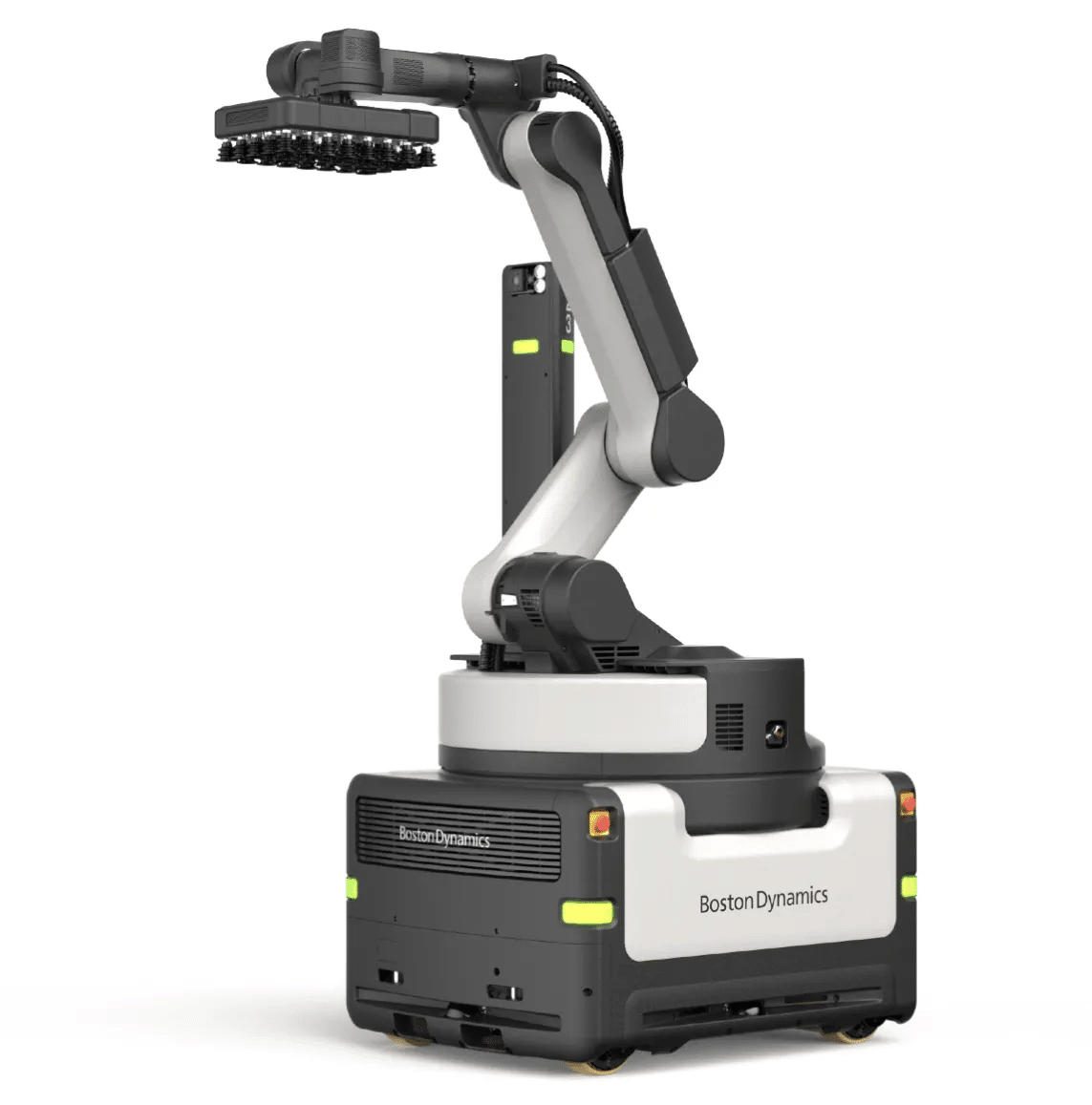
The release is the source. Boston Dynamics said on 3 November that Stretch Gen 2 is the next generation of its autonomous mobile robot for unloading trailers. The team, it says, went through data from more than 100,000 operating hours and tens of millions of boxes already unloaded, looking for what took the first machine offline. Those hours are the company’s, from the fleet it already has. They are not a public log of Gen 2, which has just been unveiled.
The hardware claims are specific, and they are still claims. Internal cabling is cut by 81 per cent, “about a half-mile’s worth,” which the company calls the biggest source of intermittent electrical faults. Joints rotate past a full turn so they no longer hit a hard stop. The emergency stop sits lower and is recessed. Exterior panels use new materials so a falling box is less likely to trip a stop or break a panel. Dynamic cables and complex harnesses are gone. A full swerve-drive swap, “for example,” now takes about one hour instead of a full day, and the company says a customer’s own maintenance team can do more of the routine work. “For example” is one job. It is not a measured cut in all downtime. The release does not say how often a drive actually fails.
A rate with a condition on it
Stretch Gen 2 “unloads up to 1,000 cases per hour,” and the same sentence says the rate depends heavily on case weight and on whether the load is neat or disordered. A multipick feature is what the company says pushes the robot to that peak. The vision system is described as pre-trained, detecting most packages from the first day with no programming. The battery “lasts two shifts.” A fast charger reaches 90 per cent in about 75 minutes. Onboard lighting is for dark trailers. A new computer takes software updates for detection, motion planning and how the arm picks, with no hardware change. Brian Donnelly, who runs logistics robotics, says the point is the hours a robot sits idle on the dock. None of those rates is an independent trial of Gen 2. A render is not a shift.
More in Robotics