Robotics · 23 October 2026 · 5 min read
Tesla says the first production-quality Optimus robots are coming off a line in Fremont. Customers are still a year away
The third-quarter letter calls the machines the first the company has built to production quality, and says the process is suitable for a commercial product. On the same day’s call, Elon Musk called it early production. He put outside deliveries around the end of 2027, and said the hands, the reliability and the software are not finished.
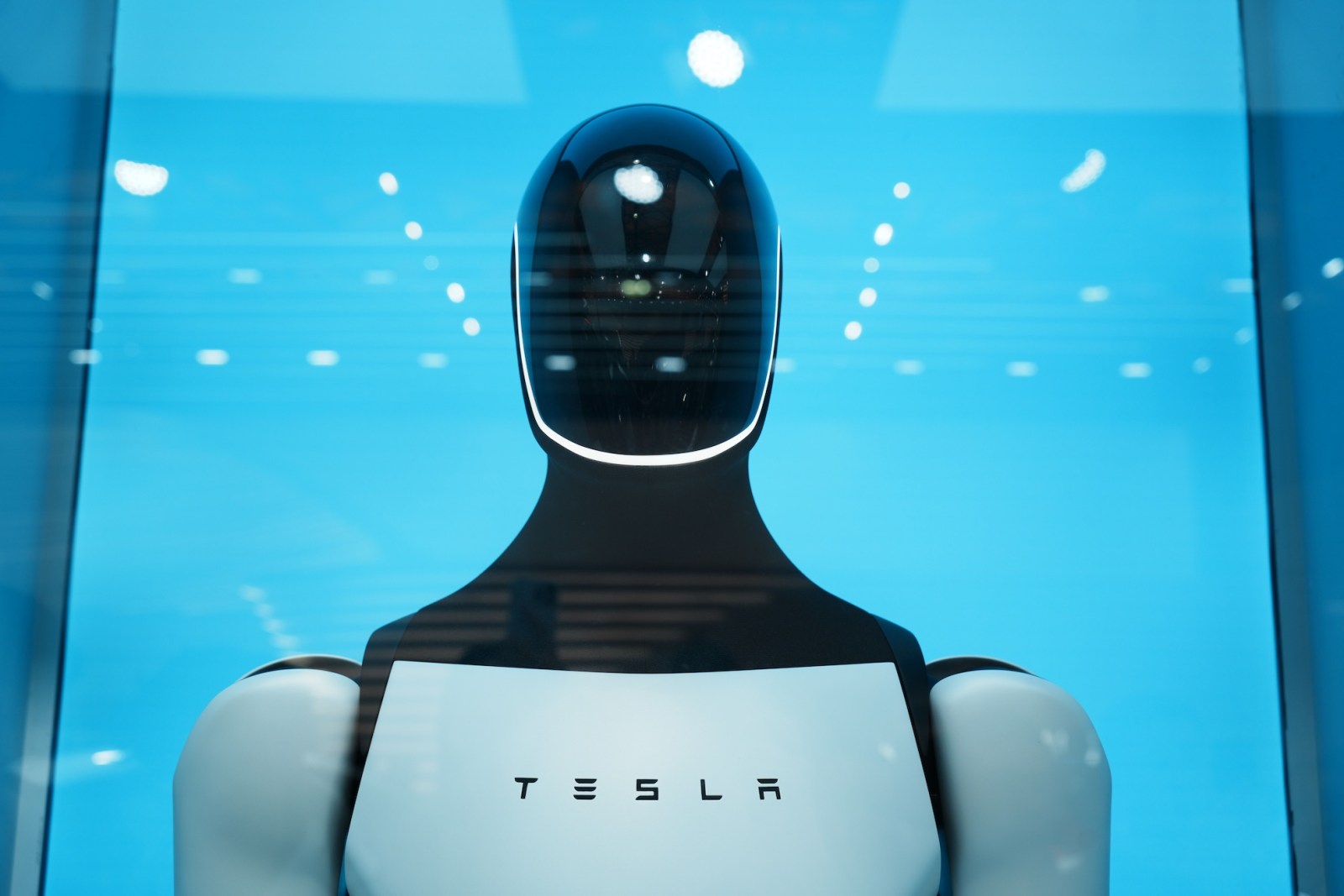
Tesla’s third-quarter letter, posted on 21 October, says production of Optimus has started on a line in Fremont, in space that used to build cars. TechCrunch quotes the letter directly: “The bots coming off this line are the first production-quality bots that we have manufactured,” and “we have proven that the current manufacturing process for Optimus is suitable for a commercial product.” The same paragraph says the company will keep changing the hardware and the process. The letter, as reported, does not say how many robots have come off the line, or what job any of them has done.
On the call the same day, Elon Musk described what has started as early production. TechCrunch reports him saying the ramp will be slow and “somewhat bumpy,” and that Tesla will be able to make 20,000 a week by the end of 2027. Electrek, reporting the same call, says he put deliveries to companies outside Tesla at around the end of 2027, and listed what is still open: the software, the electromechanical design, and reliability, including a robot that must not wear out after a month. Twenty thousand a week is a rate. It is not a count of robots that exist this week.
A line is not a fleet
The new sentence is that Tesla will now use the word production in a financial document. The old sentence, which this desk has already filed, was an internal fleet with no published tally of hours or finished jobs. Those can both be true. A process that is “suitable for a commercial product” is a manufacturing claim. A commercial product is a robot a named customer has accepted, on a date, for a task. Musk’s own timetable puts that date at the end of next year, and he said on the call that the design is still being changed. A line whose design is still moving is not yet running at the rate printed on the building.
What a reader can check later is simple. A number of robots that left Fremont. A customer who is not Tesla. A task that ran for longer than a month. None of those is in the letter.