
Infrastructure · 23 November 2026 · 5 min read
Behind-the-Meter US Data Center Power Hits ~2 GW Online, Tracking for 2.8–3.2 GW by Year-End Despite 90 GW+ Pipeline
With AI campuses generating $10M–$12M per MW annually, hyperscalers are deploying mobile gas turbines and reciprocating engines to bypass utility queues—even as only 1.2% of announced on-site capacity is actively under construction.
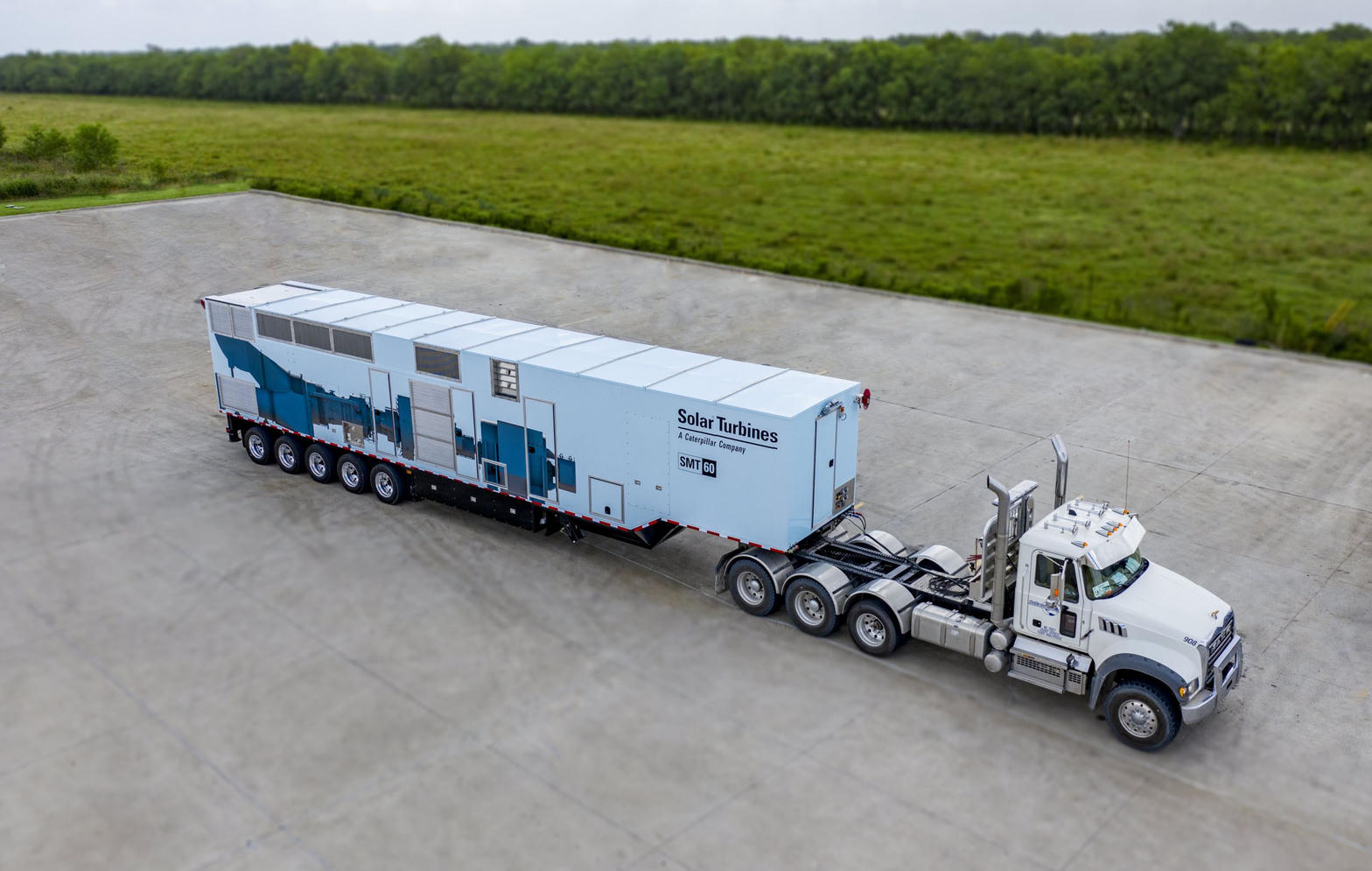
Bypassing multi-year utility interconnection queues has become the defining mantra of US artificial intelligence (AI) infrastructure, yet actual on-site power generation remains far smaller than industry headlines suggest. According to energy-project intelligence firm Cleanview, roughly 2 gigawatts (GW) of behind-the-meter data center generation is operating across four US projects—dominated by xAI’s Colossus 1 and 2 buildouts near Memphis, Tennessee—with total operating capacity projected to reach 2.8 GW to 3.2 GW by the end of 2026 (Cleanview, Nov. 2026).
The data reveals a stark divide between announced megawatts and physical construction, while illuminating the ruthless unit economics driving hyperscalers to deploy less-efficient mobile turbines rather than wait on regional transmission operators.
Technical & Financial Breakdown
Across Cleanview’s deep-dive analysis of 59 behind-the-meter data center projects representing roughly 90 GW of announced capacity (subsequently expanded to track more than 100 plants topping 100 GW in announced capacity), only 1.2% is currently under construction, 36% has cleared permitting, and 60% exists purely as announcements or early-stage plans (Cleanview, Nov. 2026; Tecshx, Oct. 25, 2026). Virtually every major hyperscaler—including Meta, Microsoft, Amazon, and Oracle—is pursuing behind-the-meter projects directly or through partners, while AI labs such as OpenAI and Anthropic have signed leases covering more than 10 GW of on-site generation.
The financial rationale is straightforward: because AI data centers generate an estimated $10 million to $12 million in annual revenue per megawatt ($10 billion to $12 billion per GW), waiting two to five years for a traditional utility substation costs exponentially more in lost revenue than paying higher fuel and operating costs for on-site power. Consequently, developers are prioritizing rapid energization over thermal efficiency—deploying mobile truck-mounted gas turbines, aeroderivative turbines, and reciprocating engines rather than waiting years for heavy-duty combined-cycle gas turbine (CCGT) plants.
Second-Order Implications
Looking into 2027, execution risk looms large. Cleanview models that if every project with a signed tenant hits its target construction schedule, another 10 GW could come online in 2027, pushing cumulative behind-the-meter capacity to 13 GW. However, factoring in realistic permitting friction, air-quality compliance, and turbine-manufacturing bottlenecks, Cleanview warns cumulative capacity could land as low as 5 GW by year-end 2027.
For power-equipment manufacturers like GE Vernova, Caterpillar, and Siemens Energy, the speed-to-power premium guarantees multi-year pricing power on aeroderivatives and reciprocating gensets, even as local communities push back against industrial generator noise and emissions.
Caveats & Open Questions
Running simple-cycle mobile turbines and reciprocating engines continuously at base load carries higher heat rates, steeper maintenance intervals, and tighter Clean Air Act nitrogen-oxide (NOx) permitting scrutiny than utility-scale combined-cycle plants. Cleanview’s public summary does not break down average levelized cost of electricity ($/MWh) across mobile turbines versus grid tariffs or exact emissions-permit timelines for the 36% of permitted projects awaiting construction start .
More in Infrastructure
- Taiwan’s TAIEX Posts Record 3,300-Point Intraday Surge as TSMC Hits 10% Limit-Up on Jensen Huang’s Return to NVIDIA
- California Public Universities Build On-Campus AI Data Centers as Community Colleges Seek $21 Million for Shared Network
- FERC Approves MISO Interconnection Overhaul to Clear 35 GW Legacy Queue and Protect 125 GW Generation Backlog