Robotics · 2 November 2026 · 5 min read
The FCC took Lightberry’s Lumi off the robot list. That is not a Unitree, and it is not a sale
Public notice DA 26-1181, released on 30 October, says the Department of War granted Conditional Approval to Lightberry Holdings’ Lumi interactive mobile robots, so they are exempt from the Covered List. The exemption holds only while the company follows the onshoring plan in its application. Lightberry says it replaces the sensors, the computer and the software, and that Lumi is compatible with a Unitree G1. Compatible is not a G1.
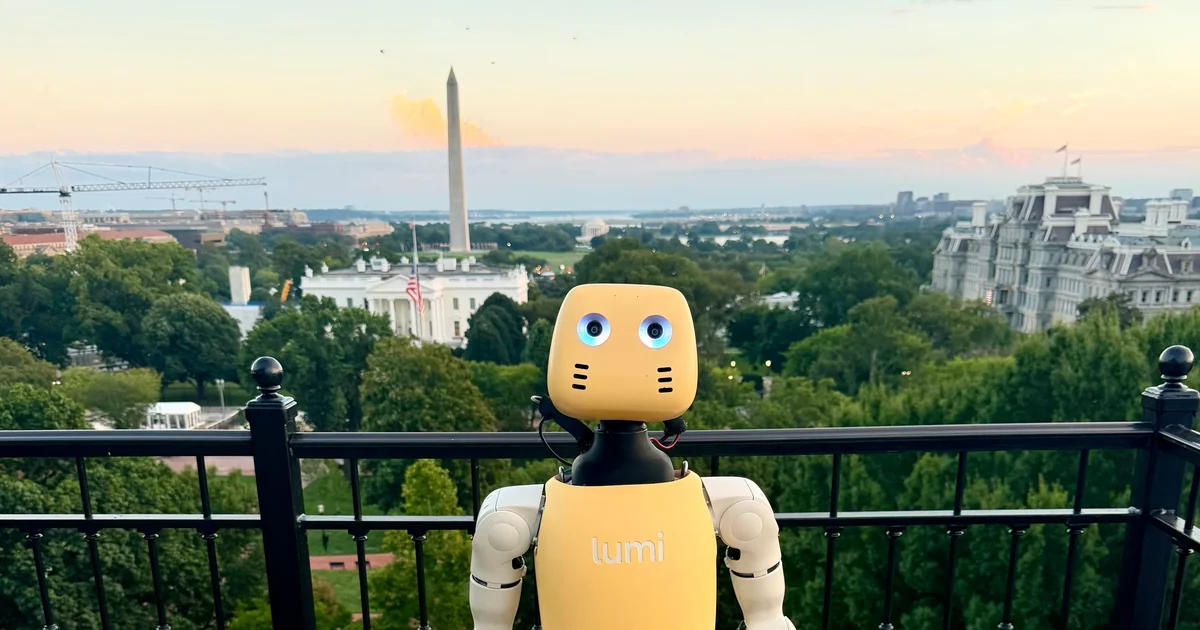
The document that matters is a public notice, not a product launch. On 30 October the FCC’s Public Safety and Homeland Security Bureau released DA 26-1181. It says the Department of War granted Conditional Approval for certain foreign-produced uncrewed aircraft, advanced robotic devices and power inverters, and it names “Lightberry Holdings, Inc.’s Lumi Interactive mobile robots” among them. The bureau’s conclusion is narrow. A Conditional Approval is “a specific determination” that those devices do not pose a risk to US national security, so they are exempt from the Covered List. Devices on that list cannot get the equipment authorisation needed to import, market or sell them. Coming off the list removes the block. It is not itself the authorisation, and it is not a customer.
The same page names other machines. Voliro, ARAPL RaaS, ATI Motors, SunScout, Swap Robotics and OMRON are on the robotic list beside Lightberry, and Ingeteam is there for power inverters. Lightberry’s own release, the same day, says it is the first and so far only humanoid company to be approved. That sentence is the company’s. The notice does not say humanoid, and it does not say only. What the notice does say, about every name on it, is that the exemption depends on “continuing compliance with the onshoring plan” in the application, “and pursuant to updated vetting” of the products. A plan in an application is not a factory that has opened. If the compliance stops, the exemption is the thing that was conditional.
What Lightberry says it offered, in exchange, is control of the insides and a manufacturing sequence. The release says the company replaces the robot’s sensors, onboard computer and software with its own. Ali Attar, the chief executive, said they “replaced every sensor and all of the software on Lumi,” and that the approval “means Lumi robots are cleared to go to work across the country.” Cleared, in his sentence, is ahead of the notice. The notice exempts a named device from a list. It does not say a unit has been sold, installed or switched on. The manufacturing line he ties to the approval “starts with Lumi’s body, head and hands, and the rest of the robot will follow.” Starts is a future. The release also says Lumi is 127 centimetres tall, that Founder Edition units are $39,990 and ship in 2026, and that the robot is compatible with the Unitree G1, which it calls the world’s most popular research platform. Compatible is a claim of fit. It is not a statement that the chassis, the motors or the nameplate are Unitree’s, and “most popular” is not a count.
A step still sits between the list and a loading dock. Attar told Humanoids Daily, in a piece published on 2 November, that the exemption lets Lightberry apply for its own FCC certification, and that he expects shipments “very soon.” He did not give a date. An application is not a grant, and very soon is not a serial number. The Covered List this notice is amending is the same rule Intel stepped around, weeks earlier, so that a software update would not stop factory vehicles it was not even sure were covered. Intel’s order named no builder and no count. This one names a robot, and then stops at the condition. Until a certification is on the page, and a unit is in a building that is not a terrace in Washington, Lumi is a machine with a conditional exemption and a price.