
Infrastructure · 23 November 2026 · 5 min read
Off-Grid Costs Will Push Data Centers Back to Utilities, Says Mitsubishi Heavy Industries CEO as Turbine Backlog Reaches 37 GW
With utilities and independent power producers representing 94% of recent turbine orders, MHI is investing $3.1 billion in manufacturing capacity while betting on regulated grid expansion over standalone data center plants.
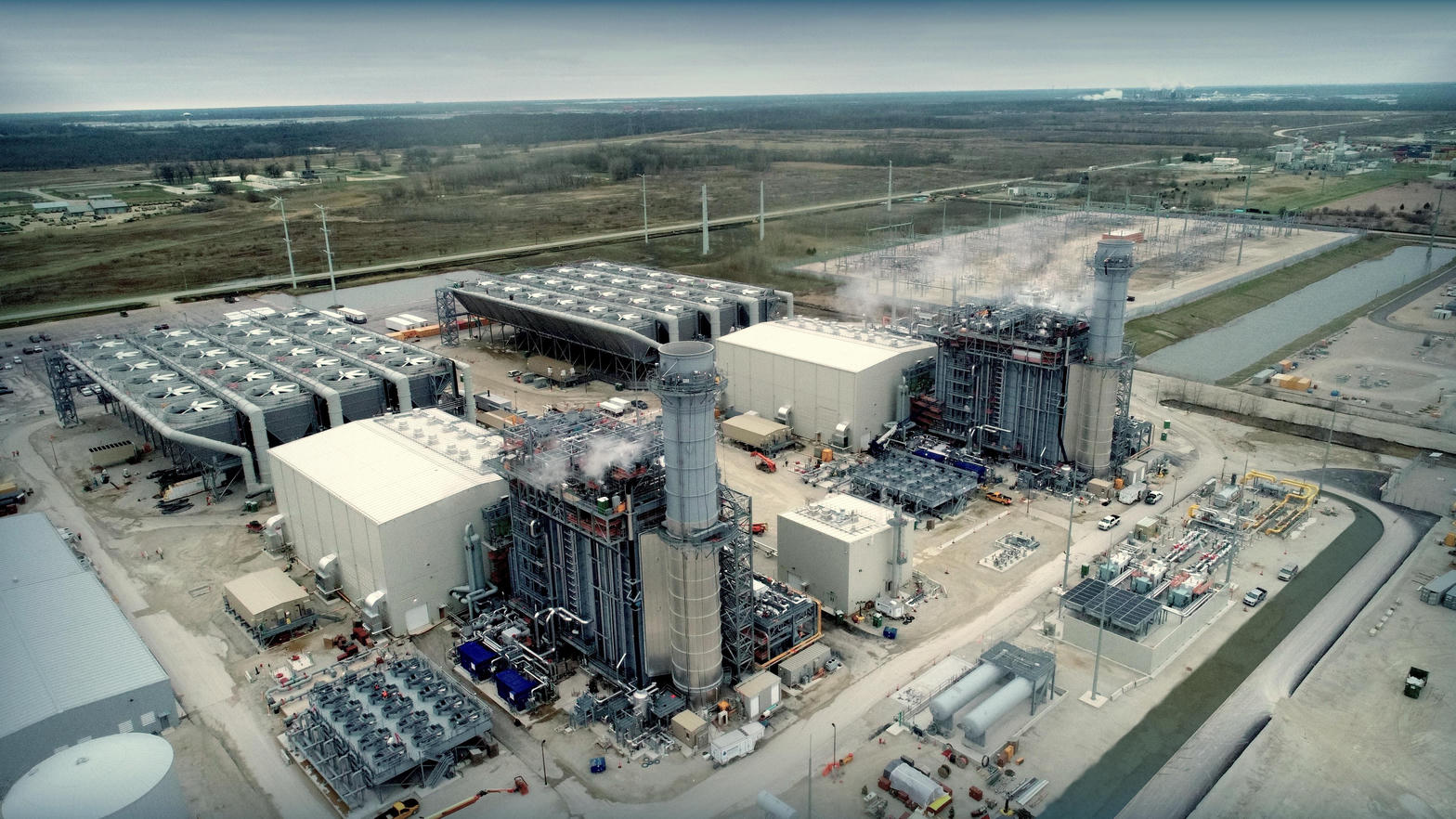
Mitsubishi Heavy Industries (MHI) Chief Executive Officer Eisaku Ito pushed back sharply against the narrative that artificial intelligence (AI) data centers will permanently bypass electric utilities, arguing on Monday, November 23, 2026, that the high operating costs of off-grid power will ultimately drive hyperscalers back onto regulated utility grids (Utility Dive, Nov. 23, 2026).
Speaking as MHI’s heavy-frame gas turbine backlog reached 83 units—roughly 37 gigawatts (GW) of generating capacity—Ito’s remarks provide a grounded industrial counterweight to US behind-the-meter announcements, showing where long-term baseload capital is actually flowing.
Technical & Financial Breakdown
MHI’s latest financial disclosures and executive commentary underscore massive demand for utility-scale Gas Turbine Combined Cycle (GTCC) hardware, paired with disciplined factory expansion (Utility Dive, Nov. 23, 2026; TECS Engineering, Nov. 8, 2026):
- Utility-Dominated Order Book: Regulated utilities and independent power producers (IPPs)—such as Georgia Power’s Plant Yates, which recently took delivery of an M501JAC combustion turbine—accounted for 94% of MHI’s new gas turbine orders across 2024 and 2025.
- 37 GW Backlog & Raised Guidance: MHI booked 19 large-frame gas turbines in the six months through September, lifting its contracted backlog to 83 units (~37 GW) and driving a 16% year-over-year (YoY) increase in new Energy Systems orders (spanning gas turbines, nuclear power, and aero engines). MHI raised its full-year FY2026 GTCC order forecast from ¥2.4 trillion to ¥3.0 trillion.
- $3.1 Billion Manufacturing CapEx: MHI is allocating roughly $3.1 billion in capital expenditure (CapEx) to expand gas turbine manufacturing capacity, while Chief Financial Officer Hiroshi Nishio cited improved pricing on new unit projects and higher production efficiency.
Second-Order Implications
MHI’s order mix highlights a clear architectural split in US AI power procurement. While hyperscalers and xAI deploy simple-cycle mobile turbines and reciprocating engines behind the meter to capture immediate $10 million-to-$12 million-per-megawatt annual AI revenue, those units burn significantly more natural gas per megawatt-hour (MWh) than utility-scale combined-cycle plants. Once regional transmission upgrades catch up in the late 2020s, lower utility heat rates and grid redundancy favor transitioning temporary off-grid campuses onto utility power—explaining why MHI, Siemens Energy, and GE Vernova are all seeing multi-year utility backlogs stretch into the 2030s.
Caveats & Open Questions
Even with $3.1 billion earmarked for factory expansion, MHI executives emphasized they are maintaining a conservative approach to capacity buildout to avoid stranded manufacturing assets if demand normalizes. MHI has not disclosed exact delivery-slot lead times for new North American M501JAC orders placed in late 2026 or the exact percentage of its 37 GW backlog explicitly tied to utility data-center load-growth tariffs .
More in Infrastructure
- Taiwan’s TAIEX Posts Record 3,300-Point Intraday Surge as TSMC Hits 10% Limit-Up on Jensen Huang’s Return to NVIDIA
- California Public Universities Build On-Campus AI Data Centers as Community Colleges Seek $21 Million for Shared Network
- FERC Approves MISO Interconnection Overhaul to Clear 35 GW Legacy Queue and Protect 125 GW Generation Backlog