Robotics · 7 October 2026 · 4 min read
Identity checks, phone compute, and one cobot with a record
The week’s machine-economy news is not a new humanoid. It is plumbing: proof a machine is real, proof a person is real, and processors a robot might hire.
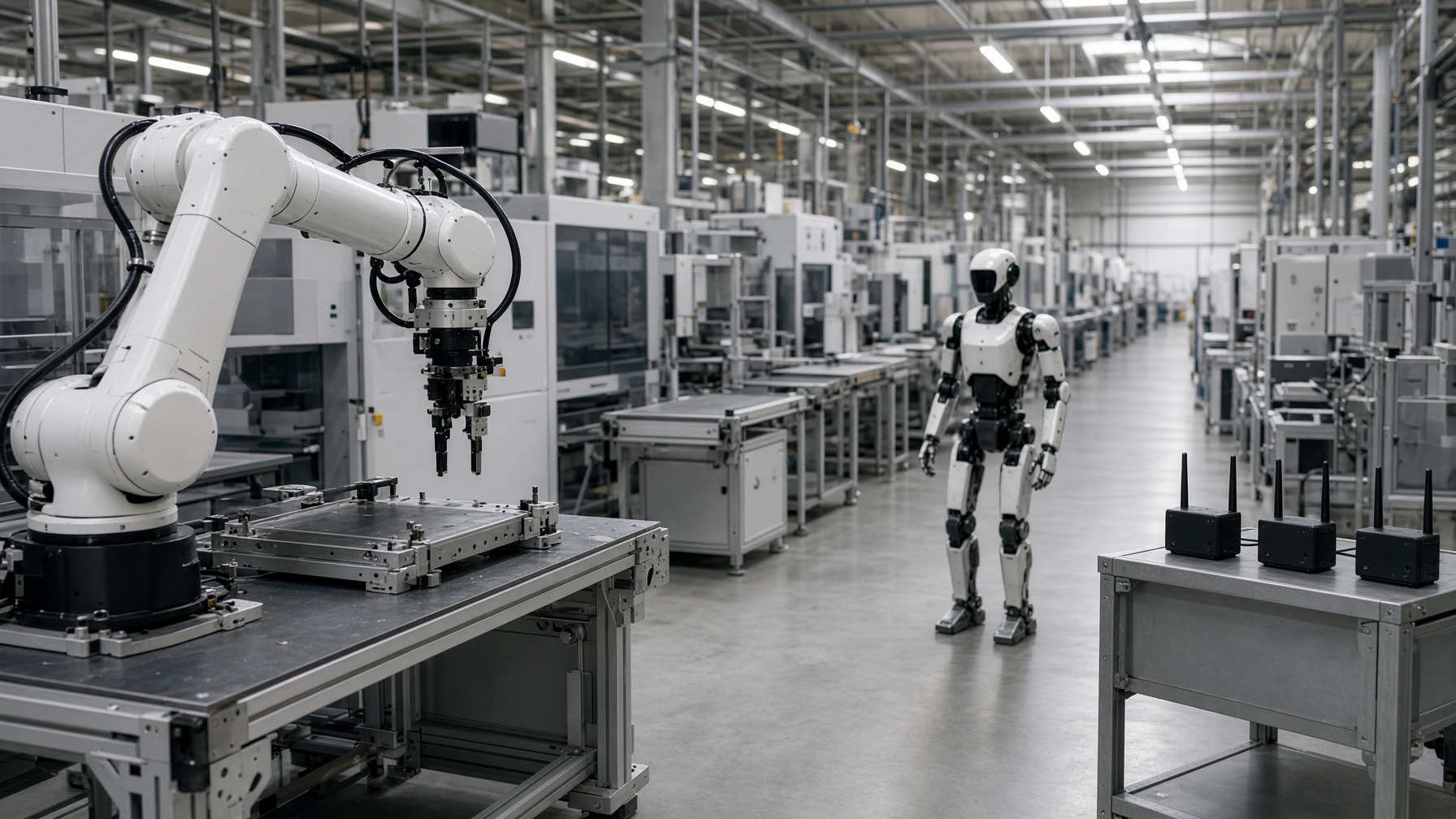
Three items belong together, even though they arrived on different days. peaqOS Verify, announced 1 October, is a check that a machine’s secure chip is genuine and that an operator stands behind it. A day later, Acurast said the first of its phone-based processors were live on the same operating stack, with robot inference among the jobs they are meant to take. At the end of September, peaqOS added a World ID check so a machine can ask whether the person in front of it is real, without storing who that person is.
None of this is a factory deployment on its own. Verify does not make a humanoid useful. A phone processor does not replace the computer on a robot that has a fraction of a second at a junction. A personhood check does not deliver a parcel. They are the unglamorous layer this desk follows because fleets, insurers and other machines keep asking the same questions: which machine, which person, and where does the next computation run.
What is still a pilot
The Doosan cobot running peaqOS Pro, placed with a supervised student group at the Technical University of Munich, is the clearest hardware story in the set. It is one machine, with a hackathon planned for later in October, not a product line. Tesla’s Optimus remains an internal fleet. Treat production-ramp claims as claims about a company’s own factories until there are outside customers and unsupervised hours.