Robotics · 5 November 2026 · 6 min read
The first humanoid stock is due today. It sold $174,000 in six months
Agility said on 5 November that it had become the first US-listed pure-play humanoid company, and that the shares and warrants will begin trading today as AGLT and AGLTW. The release has no price. The $174,000 is not in that release. MarketWatch, citing the company’s disclosure, reported first-half net sales of $174,000 and an operating loss of $362.7 million. This note was written before the US cash open.
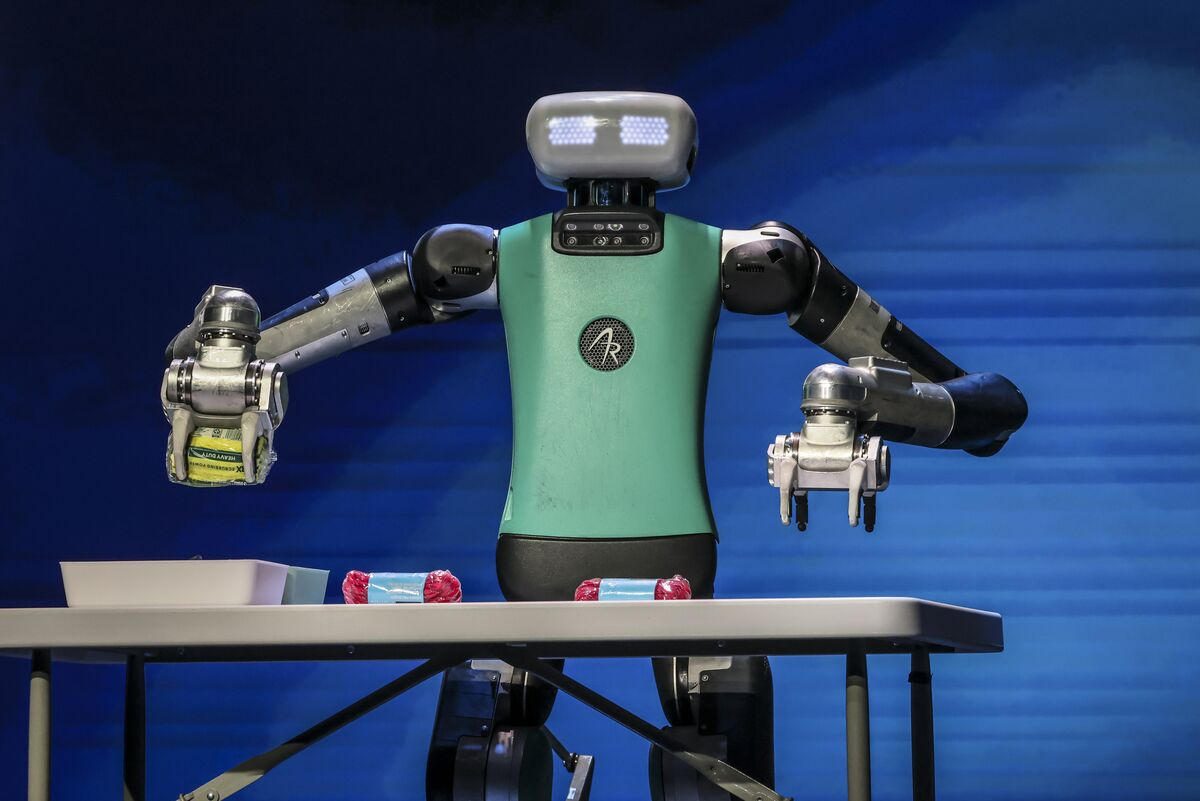
Agility Robotics said on 5 November that it “today became” the first US publicly listed pure-play humanoid company with what it calls proven, active commercial deployments. The next sentence is still in the future. Common stock and warrants “will begin trading today” on Nasdaq, as AGLT and AGLTW, after the business combination with Churchill Capital Corp XI. Became, and will begin, are not the same verb. The release contains no share price, no volume and no valuation. This desk has no trade to report. The US cash session had not opened when this was filed.
What the trading-day note does put back is the capital. The combination and the related financings “represent approximately $465 million in gross capital raised before transaction expenses.” The company says that sum includes a private investment led by Foxconn and $100 million of equity funding received before the close. Gross capital before expenses is not cash in a drawer, and it is not a price for the shares. Agility says it intends to use the proceeds to fulfil orders, expand deployments, scale Digit production and keep building the robotics platform. An intention is not a robot shipped.
The sales line is not the order book
The sales figure in the headline is from a different document. MarketWatch, in a Dow Jones report on 5 November, said Agility disclosed $174,000 of total net sales in the first half of 2026, down 72 per cent, which the company attributed to one-off robot sales in the first half of 2025. The same report said the cost of goods sold rose roughly 110 per cent, to nearly $3.9 million, and that the operating loss was $362.7 million, against $72.6 million a year earlier. A significant part of that loss, the company said, was stock-based pay. An operating loss swollen by share awards is not $362.7 million of cash leaving the building. As of 30 June, MarketWatch reported, cash and cash equivalents were $14.7 million, with a further $7.1 million restricted. That date is before today’s capital. Do not subtract June’s cash from November’s gross raise and call the result a balance.
The order book in the release is the one already filed, restated. More than $300 million of committed multi-year Digit 5 orders, still subject to contractual milestones, product features and specifications. Digit 5 was unveiled in September 2026. Early customer access is expected in the first half of 2027. General availability is targeted for the end of 2027. As of 30 June, the same MarketWatch report said, performance obligations the company expected to recognise as revenue within 12 months were $544,832. A milestone order and a sum expected on the books this year are different numbers. The release also names three paid manufacturing programmes whose customers are not named: a major global carmaker, one of the world’s largest automotive technology and components developers, and a leading consumer-products manufacturer. A pipeline of more than 30 prospective customers, including in defence, is a list of conversations. It is not 30 contracts, and it is not the $300 million.
Digit, the company says, has more than 65,000 hours of operation and is already working with GXO, Schaeffler and Toyota Motor Manufacturing Canada. It says Digit has moved more than 100,000 totes at the Georgia site, and that two further US logistics sites are due in early 2027. AGCO has a pilot expected in 2027. Those lines were in yesterday’s close note. Repeating them does not make them new work. The trading release also repeats a nine-minute charge and more than 20 hours in a day from the Nyobolt pack, and a Salem factory designed for up to 10,000 robots a year. Designed for is not produced. The filing language MarketWatch quoted is plainer than the headline: an early-stage company, a history of net losses, and significant expenses and continuing losses expected for the foreseeable future.